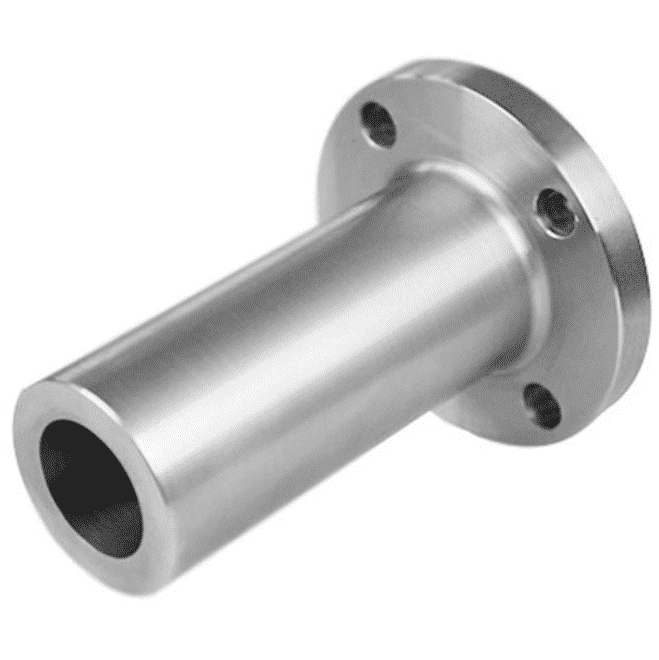
Hub Flanges Supplier in Mumbai
The Metallurgy and Surface Finish Seating Face Engineering
The operational lifespan, mechanical resilience, and chemical defense of a heavy-duty hub flange depend entirely on its specific metallurgical composition and the precision finish of its machined sealing faces.
Chemical Composition and Multi-Material Grade Adaptability
Industrial processing loops require specific material categories tailored to specific chemical, thermal, and mechanical variables:
- Carbon Steel (ASTM A105N / A350 LF2): The high-strength industry baseline standard for general oil, water, and ambient gas pipelines. The normalized A105N provides robust structural stability, while the LF2 modification preserves exceptional structural notch toughness in low-temperature lines down to -46°C.
- Stainless Steel (ASTM A182 F304L / F316L): Enriched with chromium, nickel, and molybdenum to provide outstanding resistance to general atmospheric rust, oxidation scaling, and corrosive media across chemical, pharmaceutical, and water filtration networks.
- Alloy Steel (ASTM A182 F11 / F22 / F91): Chrome-Moly formulations engineered specifically to enhance high-temperature creep strength and prevent hydrogen attack in high-pressure superheated power utilities and refinery cracking units.
- Superalloys (Inconel, Hastelloy, Monel): Formulated with rich nickel, chromium, or molybdenum bases to deliver absolute structural integrity in extreme chemical lines, wet chlorine gas loops, or hydrofluoric acid systems without creep deformation.
Precision Sealing Face Profiles and Roughness Height Management
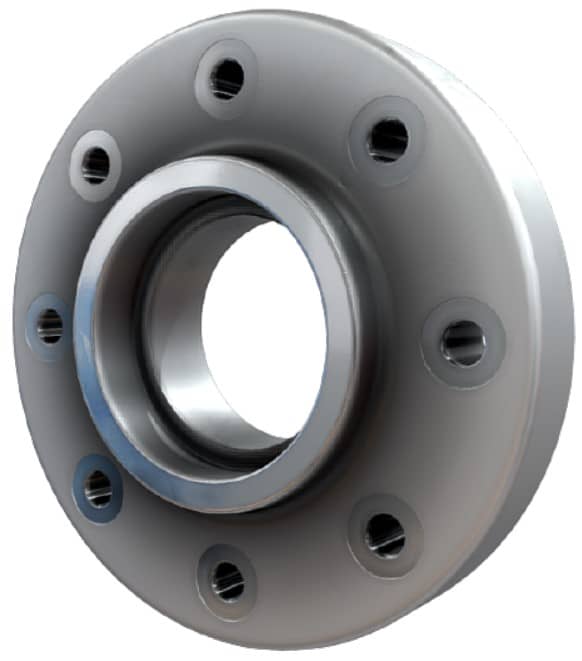
Equally critical is the dimensional machining of the sealing face. When tightening a flanged connection, the mating surfaces must compress the gasket with absolute uniformity to contain high-energy fluids. Our specialized CNC turning centers machine precise concentric or phonographic serrations into the Raised Face (RF) or Flat Face (FF) profiles, maintaining a strict 125–250 micro-inch AARH (Arithmetic Average Roughness Height) surface finish. This targeted roughness forces the gasket material to cold-flow directly into the micro-grooves, creating an impenetrable, leak-proof barrier capable of containing Class 150# to Class 2500# process streams. For high-pressure operations, high-precision Ring Type Joint (RTJ) grooves are machined to accept metallic ring gaskets.
Primary Raised Hub Structural Modifications
Depending on specific structural constraints, welding preferences, line sizing, and pressure boundaries, we manufacture hub components across several distinct variations:
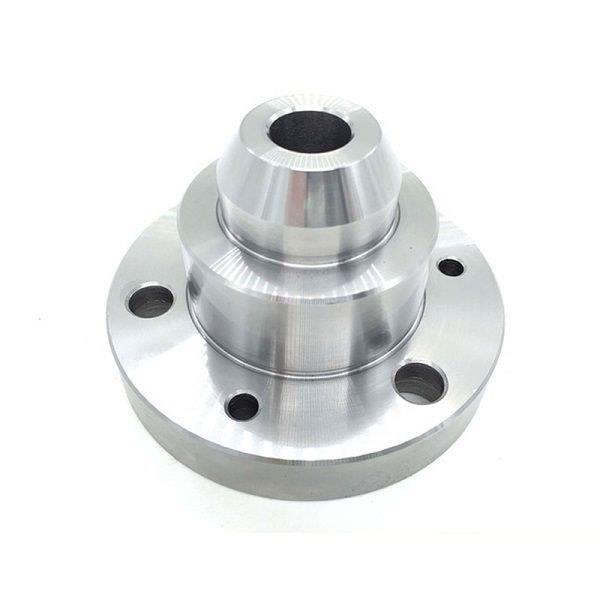
- Tapered Hub (Weld Neck Style): Features a long hub profile that transitions gradually in wall thickness to match the companion pipe schedule bore perfectly. This transfers dynamic bending moments away from the joint interface directly into the pipeline run, making it the premier choice for high-pressure or severe cyclic environments.
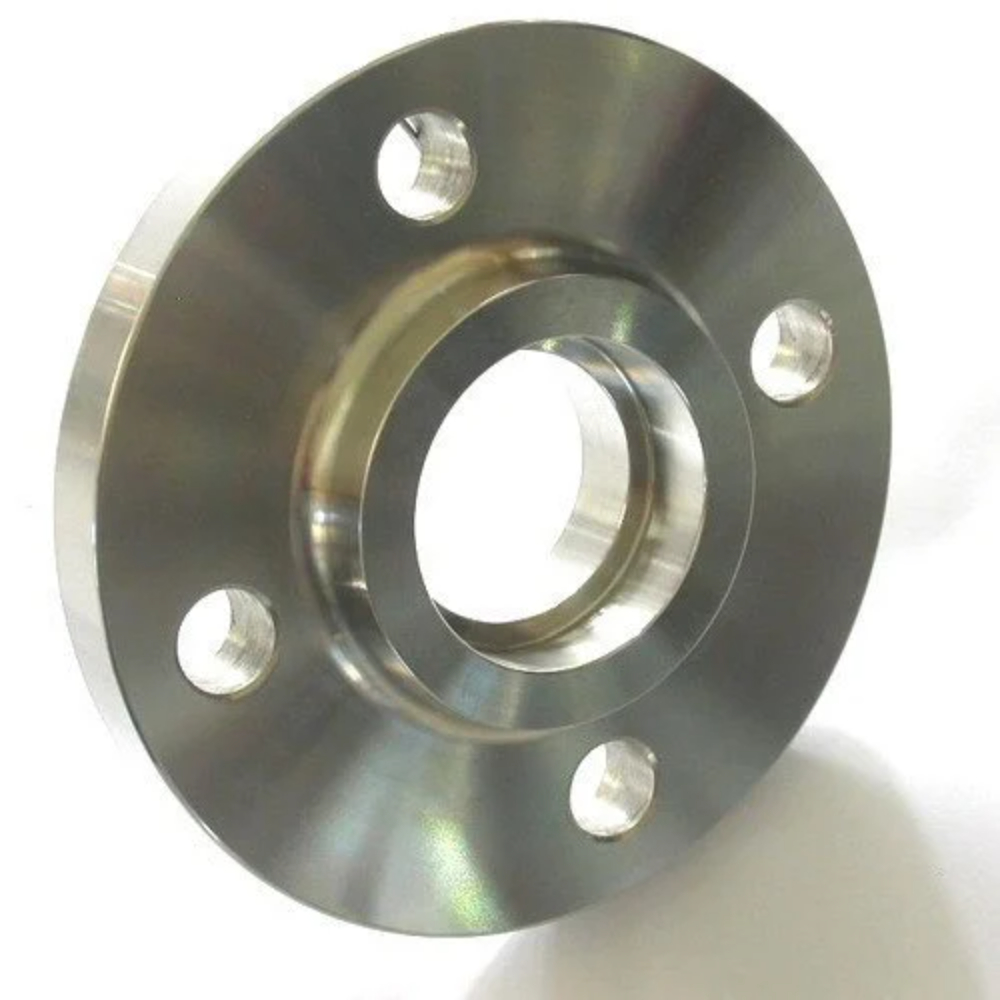
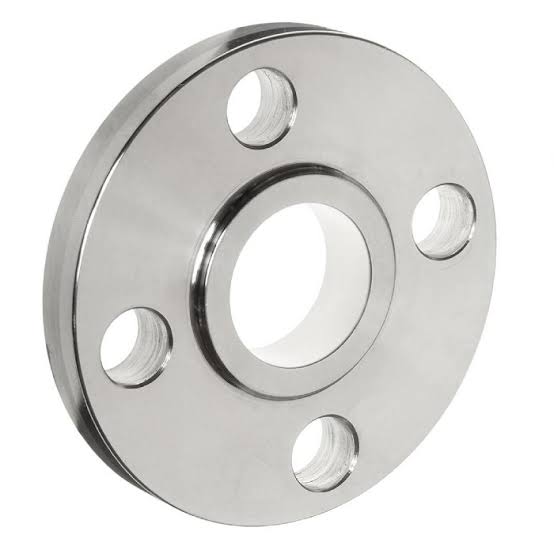
- Straight Hub (Slip-On / Socket Weld Style): Features a straight, non-tapered cylindrical raised sleeve extending from the base ring. The pipe slips directly inside this hub sleeve and is secured via dual internal and external structural fillet welds, allowing for rapid rotational alignment during field assembly.
Dimensional and Material Specifications
Our production engineering strictly follows global dimensional codes to ensure hassle-free integration with global piping infrastructure and commercial boiler packages.
| Parameter |
Specification Details |
| Design Standards |
ASME B16.5 (1/2" to 24"), ASME B16.47 (Series A & B large diameter boundaries up to 60"), EN 1092-1 Type 11 / Type 12, DIN, JIS B2220 |
| Material Specifications |
ASTM A105, ASTM A350 (Low-Temp), ASTM A182 (Forged Stainless/Alloy), ASTM B564 (Nickel Alloys) |
| Common Material Grades |
A105N, LF2, F304L, F316L, F11, F22, F91, Inconel 625, Hastelloy C276, Monel 400, Duplex F51/F53 |
| Pressure Classes |
Class 150, 300, 400, 600, 900, 1500, 2500 LBS / Metric PN6 to PN400 parameters |
| Facing Design Formats |
Raised Face (RF Serrated), Flat Face (FF), Ring Type Joint (RTJ oval/octagonal groove ring), Tongue & Groove |
| Size Range Spectrum |
1/2” NB up to 60” NB (Bores and internal diameters custom-machined to match precise schedule thickness metrics) |
| Testing Regimens |
100% PMI analysis, Volumetric Ultrasonic Hub Check, CMM Geometric Audit, LPT, Hardness check |
Driving B2B Procurement via an Authorized Flanges Dealer in Mumbai
For global engineering, procurement, and construction (EPC) firms managing large-scale industrial projects, handling thousands of critical piping connections is a complex logistical task. Partnering with a dedicated distribution channel in Mumbai gives you a distinct operational edge.
We provide volume-based commercial discounts, comprehensive material traceability certifications (MTC EN 10204 3.1/3.2), and durable, sea-worthy packaging designed to prevent edge dents, hub profile distortion, or seating face scratches during transport. Additionally, our sales engineers provide direct technical support to procurement teams, verifying imperial bolt patterns, checking pressure class limits, and matching internal bore configurations to your precise layout specifications.
Hub Flanges Exporter in Mumbai
Fulfilling Global Contracts as a Top Forged Hub Flanges Exporter from Mumbai
Our focus on precision machining and zero-defect forging has earned strong international trust. Operating from the export hub of Mumbai, we regularly ship high-reliability forged hub flanges to offshore extraction fields in the Middle East, high-temperature power generation infrastructures in Europe, and industrial water distribution networks across Southeast Asia.
Every export order passes through a strict final quality checkpoint, including full dimensional analysis, 100% PMI validation, and face flatness checks. We package shipments in heavy-duty, export-grade wooden cases equipped with moisture-resistant barriers and tailored face protectors. This ensures your components arrive at the project site ready for immediate installation.
Technical Specifications Summary
| Hub Flanges – Technical Specifications |
Details |
| Size Range Spectrum |
1/2" to 60" (Complete Nominal Bore Spectrum for reinforced piping connections) |
| Pressure Designation |
150#, 300#, 400#, 600#, 900#, 1500#, 2500# LBS, metric PN 6 to PN 400 Bar ratings |
| Type Configurations |
Tapered Weld Neck Hub, Straight Slip-On Hub, Threaded Hub, Socket Weld Hub |
| Face Design Formats |
Raised Face (Serrated RF 125-250 AARH), Flat Face (FF), Ring Type Joint (RTJ Groove), Male & Female |
| Manufacturing Process |
100% Hot Forged / Fully Heat Treated & Precision CNC Bored & Face Finished |
| Testing Protocols |
PMI verification, Brinell/Rockwell Hardness check, Volumetric Ultrasonic Hub Audit, LPT, Face Flatness checking |
| Surface Protection |
Anti-Rust Oiled, Black Phosphated, Zinc Electroplated, Hot-Dip Galvanizing, Lacquer Coating |